
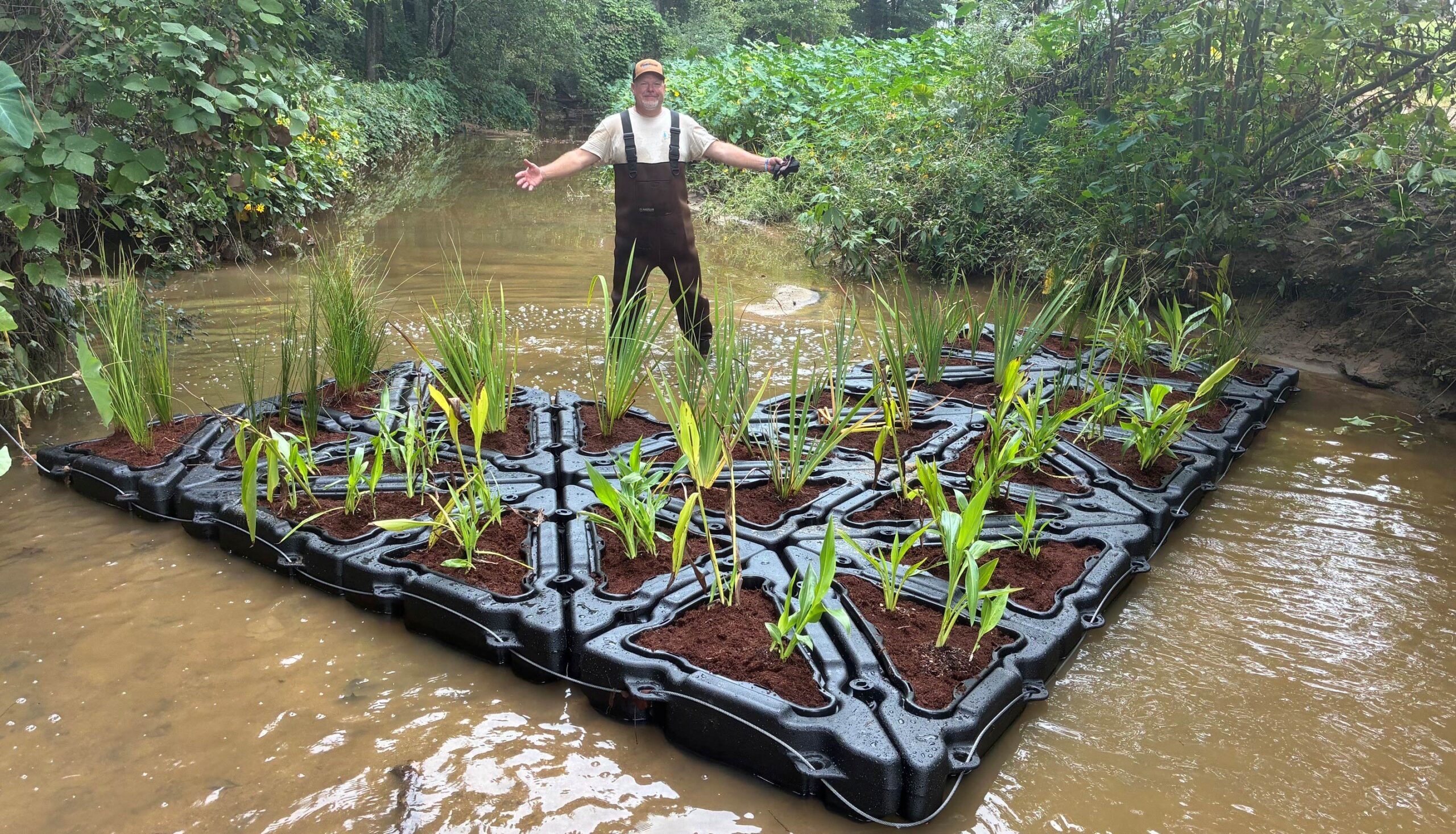
MEET MIKE FREEMAN,
LEAD SPECIALIST, STORMWATER- WATER QUALITY FOR AU RISK MANAGEMENT & SAFETY
A veteran of the US Army and USCG, Michael has chosen to spend his professional life in positions that enable him to serve others and the environment.
Michael, as Lead Specialist, has served Auburn University Risk Management and Safety for over twenty years. On a day-to-day basis he contributes to the overall wellbeing of Auburn University by managing the MS4 (Municipal Separate Storm Sewer System) permit responsibilities on and off campus, advancing the erosion and sediment control plan within university capital projects, the on and off campus SPCC plans/permits and advancing overall water quality at AU.
He has also contributed to watershed management efforts on Auburn’s campus, in particular the initiative to restore Parkerson Mill Creek as a campus amenity. Michael also works with partners around the state to advance water quality initiatives. Mike often works with the AU Water Resources center on campus projects including: Creek litter pickups, invasive plant removal, floating wetlands installations, storm drain marking and water quality testing.
Water is one of Michael’s prime interests, and he is an active member/supporter of Alabama Stormwater Association, American Water Resources Association, Coosa Riverkeeper, Alabama Water Watch, Mobile Baykeeper, Alabama Coastal Foundation, Alabama Water Environment Association, and Alabama Rivers Alliance. He is also involved in sportfish competition, where he is a voice for water quality protection and sustainability. Holding undergraduate degrees in Healthcare Administration and Emergency Medical Systems, Michael has over 80 certifications in multiple disciplines dealing with emergency management, law enforcement, fire service, emergency medical services, water quality, hazardous materials, DOT/FAA and maritime environmental response/inspection and testing. As a water advocate in the state, Mike is always busy with new projects to protect and improve water quality.
Current Projects: Floating Wetlands + Alabma Water Watch Testing
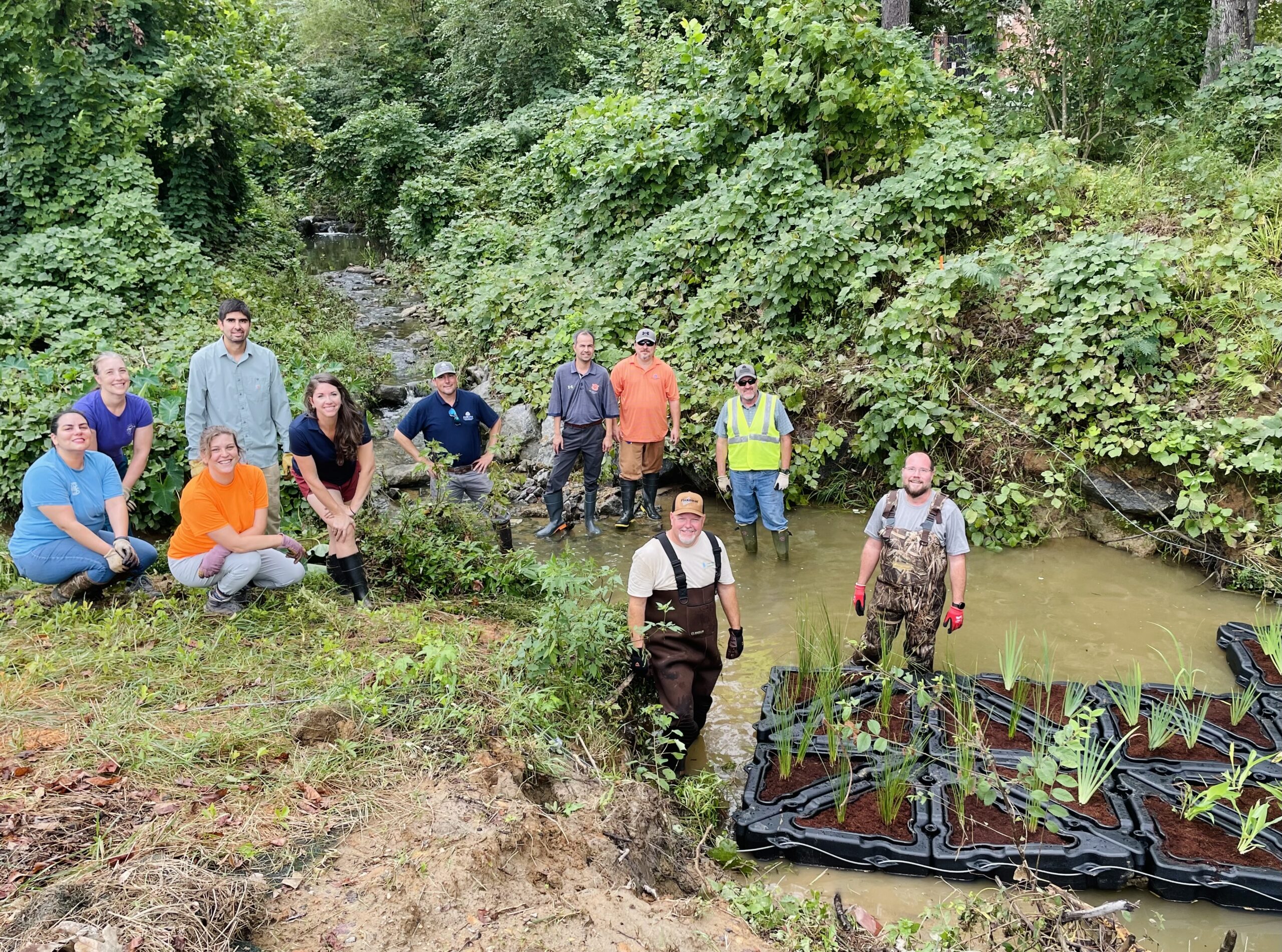
Mike and volunteers installing AU’s first floating wetlands system in Parkerson Mill Creek, 2026.
This year, Mike worked with volunteers from Auburn University’s Water Resources team, City of Auburn, and Geosciences to install a floating wetlands system on Auburn University’s local stream Parkerson Mill Creek. The project was part of the Alabama Rain Ready program headed by the AU Stormwater Research Facility.
Parkerson Mill Creek is considered impaird, or not meeting its water quality standards, due to pathogen levels in the waterway. Much of Mike’s work involves protecting and improving the water quality on AU’s campus through various means, including overseeing stormwater best management practices on campus, ongoing water quality testing, and developing partnerships across campus to work on water quality related projects.
By installing a series of modular floating wetlands along the stream, the hope is to help reduce pathogen loads in the waterway. Active microbial biofilms can form on suspended dense plant root networks in the water column. As plants establish, roots grow into the water column, forming a dense fibrous network. Mike will continue to monitor the wetlands and maintain them as the plants grow over time.
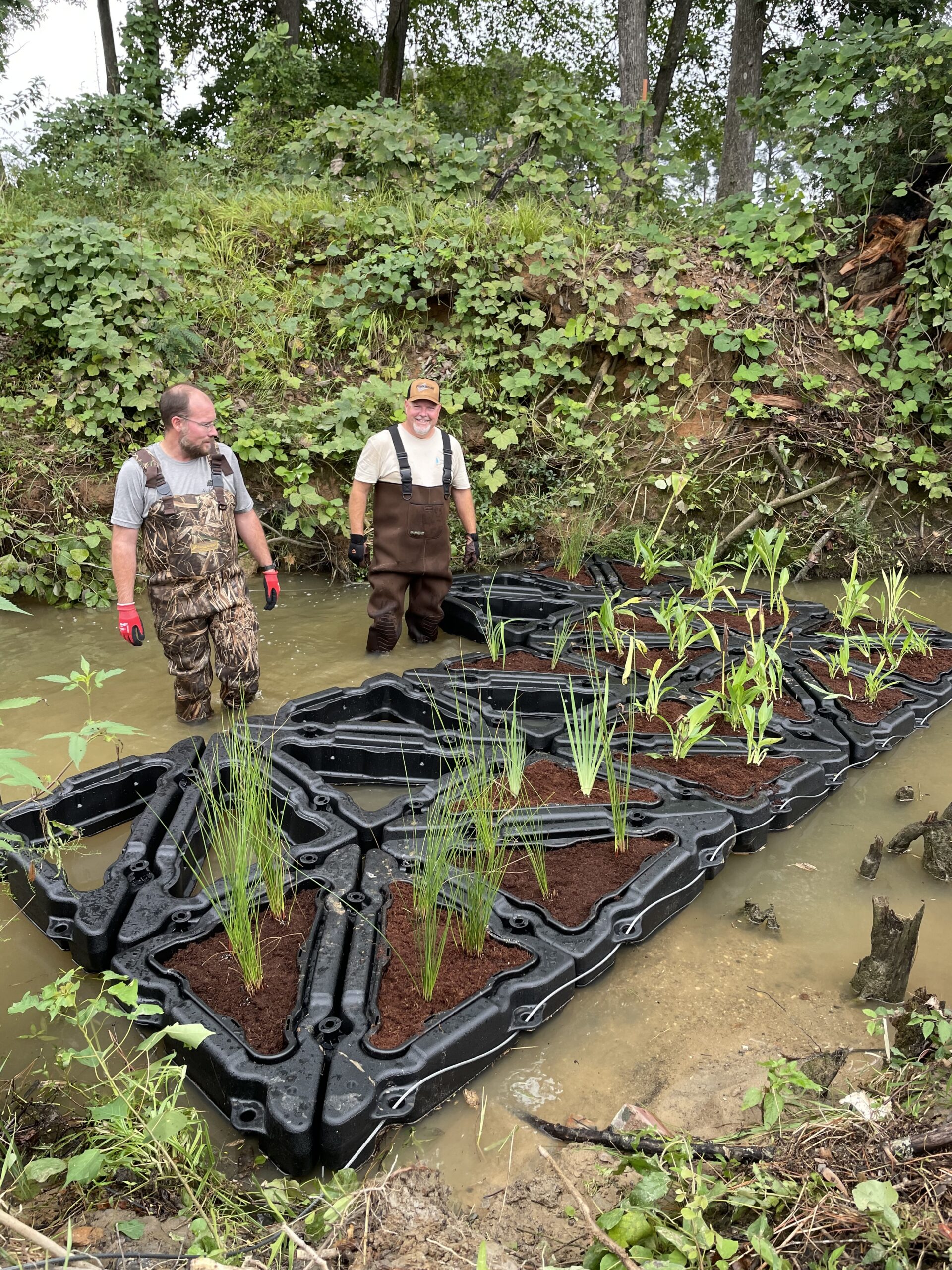
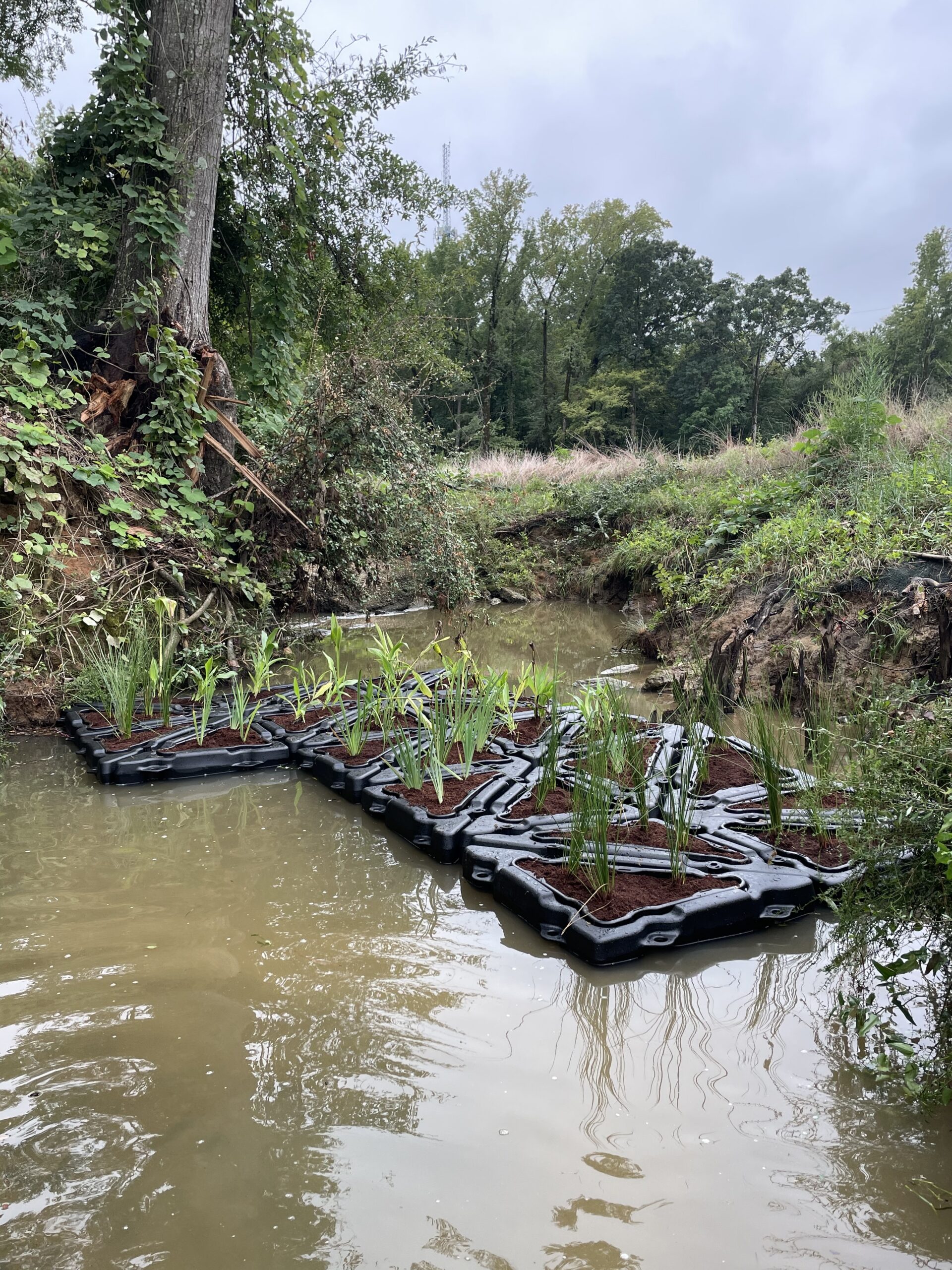
Photo of some of the floating wetlands along Parkerson Mill Creek.
Alabama Water Watch Testing
Mike manages Auburn University’s MS4 permit requirements, as required by the Alabama Department of Environmental Management. AU Risk Management and Safety (RMS) leads this effort and works with Alabama Water Watch to identify target locations of pollutant concern across campus, create a consistent testing plan, and establish strategic sampling sites. AWW water monitors collect bacteria data from around 13 the sites on campus each month. AWW’s fast testing can provide bacteria results within 24 hours, allowing Auburn University to then quickly investigate sites with high bacteria levels. This ‘first alert’ allows AU Risk Management and Safety to further investigate the potential cause, and when possible, take action. By working with AWW, Auburn is able to test more frequently with faster feedback loops, making corrective action easier.
This process is often messy and takes time, as often issues in MS4 systems are varied and difficult to detect. In the long run however, it is effective. This project has yielded over 500 data records, helping prevent chronic, undetected pollution in the watershed. Cost estimates show that it would cost over $190k to conduct the same amount of data collection through a professional lab. Often water quality issues cross campus boundaries and it is necessary to involve the City of Auburn as well. Much of this project’s success can be credited to the good working relationship between AWW, RMS, and the City of Auburn.
Good partnerships are a critical part of improving water quality across AU’s campus. Mike has been influential in forming and maintaining many critical partnerships across campus and with the City of Auburn.
We look forward to working with Mike and AU Risk Management to continue protecting Parkerson Mill Creek.
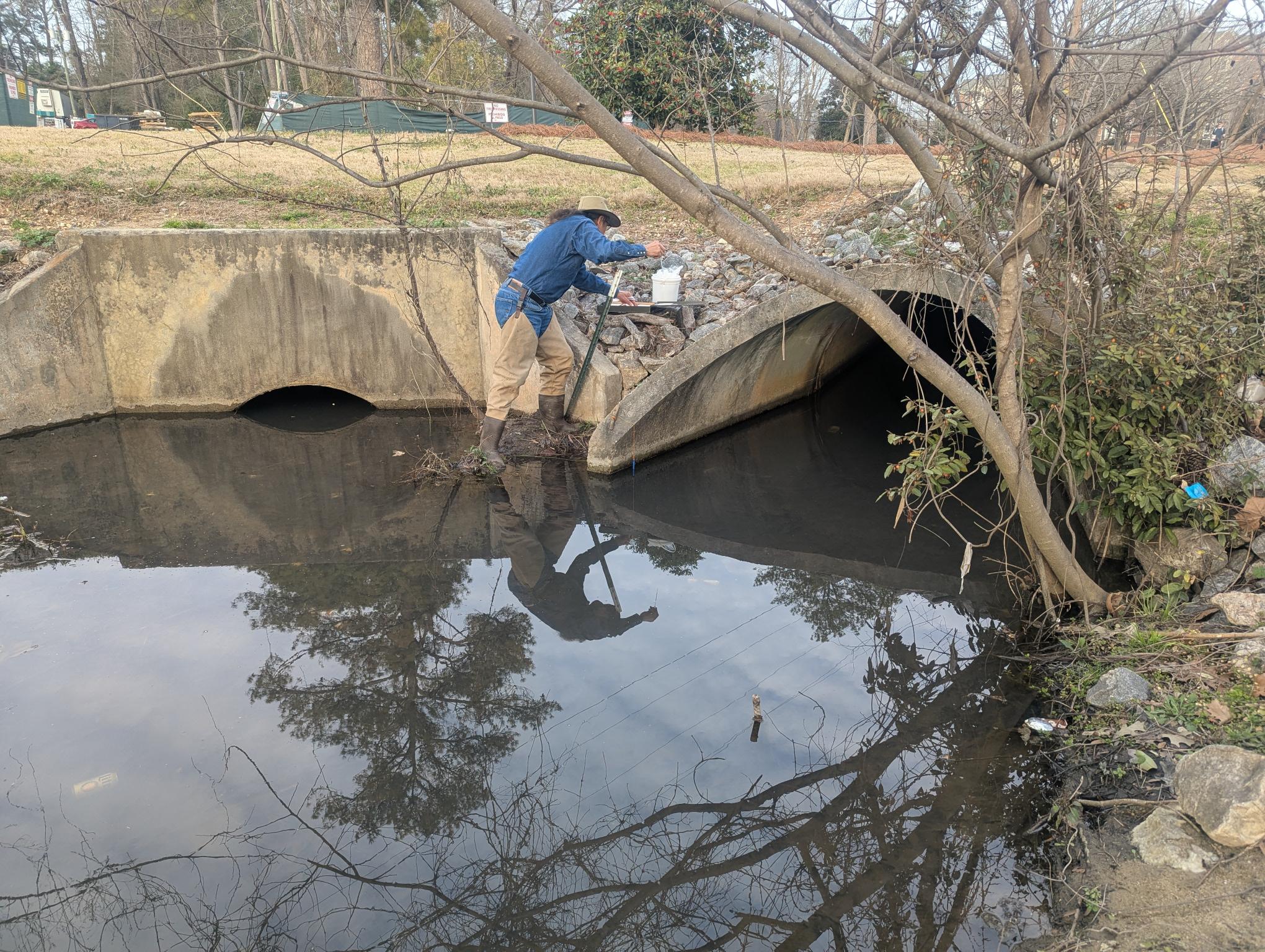
Sergio with Alabama Water Watch providing water quality testing on sites across Auburn’s campus.
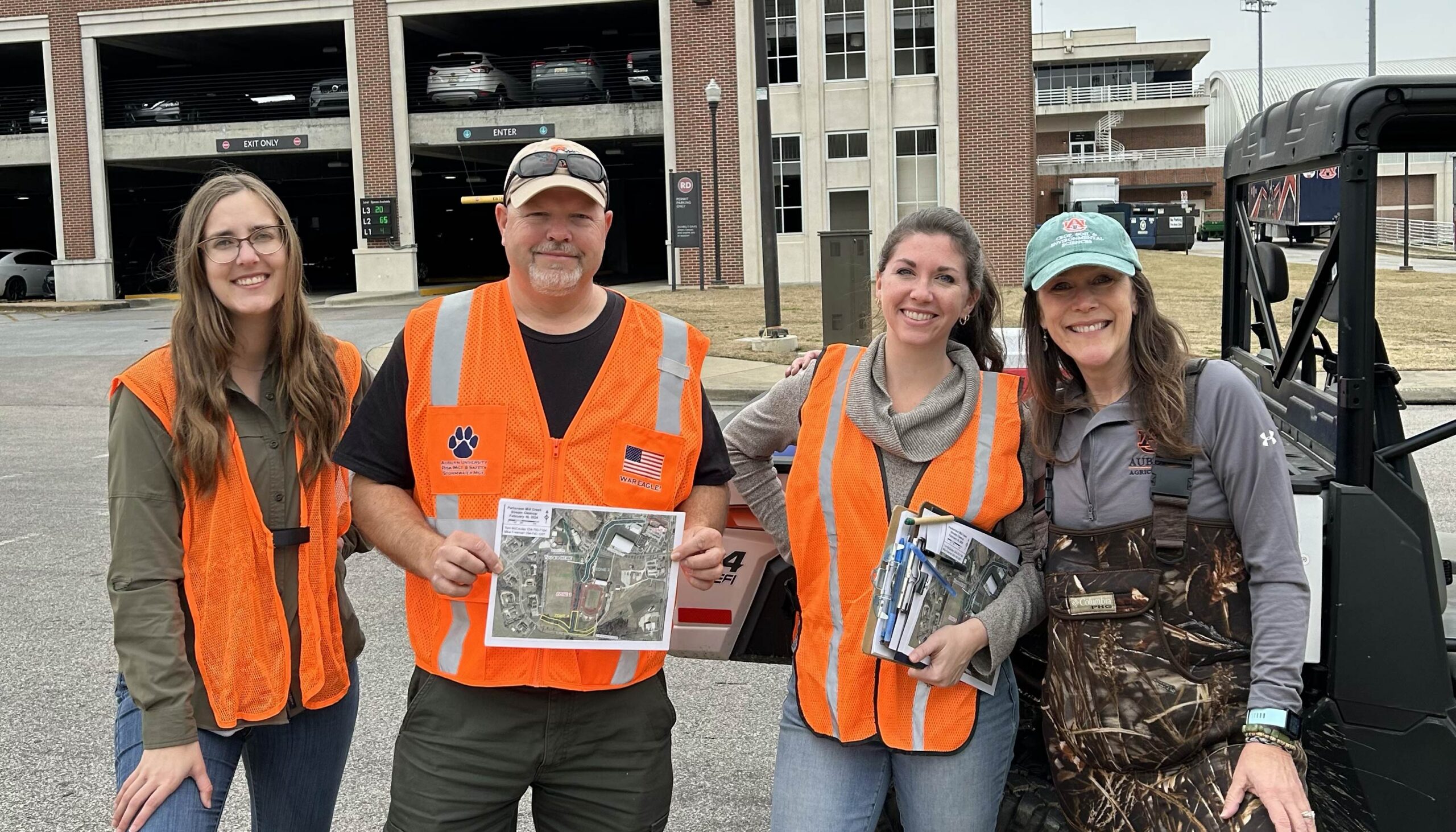
Mike Freeman organizes litter pickup along Parkerson Mill Creek, 2024.