
This article was written by Mona Dominguez and originally appeared in the Alabama Municipal Journal, you can find the full article here.
In recent years, the concept of citizen science has been gaining attention and popularity. You may have also heard it referred to as community science, participatory science or volunteer monitoring. Citizen science is the concept of involving the public with scientific research. Individuals are trained in scientific methods and can collect data that can be useful for larger projects. However, you may not have realized that citizen science water monitors can also help municipalities meet their municipal stormwater requirements.
Stormwater and MS4 Permits
When it rains, water washes over the landscape and eventually flows into nearby streams, rivers or lakes. Urban areas have Municipal Separate Storm Sewer Systems (MS4s) to help move stormwater runoff away from infrastructure and into local waterways. Through storm drain inlets, runoff enters underground pipes that release mostly rainwater collected into local streams. While attempting to remove water quickly and efficiently, our stormwater systems also introduce potential pollutants to enter our waterways. In urban areas, asphalt, concrete and buildings increase the amount and flow of water runoff entering local streams. Increased runoff also makes flooding a greater risk. Runoff can carry excess sediment to muddy streams, introduce toxic substances to harm aquatic health, or carry excess fertilizers that cause algal blooms or human and animal waste that impact the health of humans recreating in the waterways.
Many people have the misconception that cities treat stormwater, which can lead them to take actions that further increase pollution via stormwater (e.g., dumping toxic materials, allowing lawn clippings, pet waste or excess fertilizer to enter storm drains).
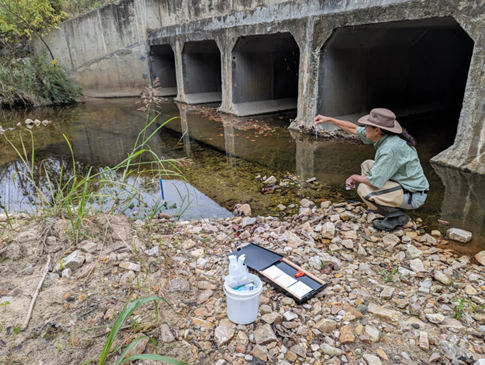
Sergio Ruiz Cordova of Alabama Water Watch conducting bacteriological monitoring on Parkerson Mill Creek that runs through AU’s campus. Photo Credit: Carolina Ruiz
How Citizen Science Can Meet MS4 Minimum Control Measures
Public Education and Outreach
Municipalities must provide educational material about stormwater to residential, industrial, commercial and construction audiences. AWW water monitoring training increases understanding of water pollution, water quality standards and best management practices, helping meet MS4 requirements.
Public Participation and Involvement
Municipalities must allow the public to participate in the development of the stormwater management program. When stormwater managers engage with citizens through AWW, they can speak the same water monitoring language. Volunteers and stormwater managers have the shared goal of keeping our waterways healthy and developing an effective plan.
Illicit Discharge Detection
By partnering with AWW volunteer monitors, municipalities can receive a “first alert” for illicit discharge detection and other water quality issues. They can draw on their experience and make reports that include valuable details and even data, which will help a stormwater manager pinpoint the source of pollution.
Good Housekeeping
During trainings, volunteers not only learn about causes of pollution and how monitoring can detect water quality issues, but how those issues can be prevented by implementing best management practices.
Construction Site Runoff
Volunteers are familiar with the threat construction site runoff can pose to water quality, especially turbidity. They can help document sites that need attention by taking photos, collecting downstream water quality data, and communicating issues to stormwater managers.
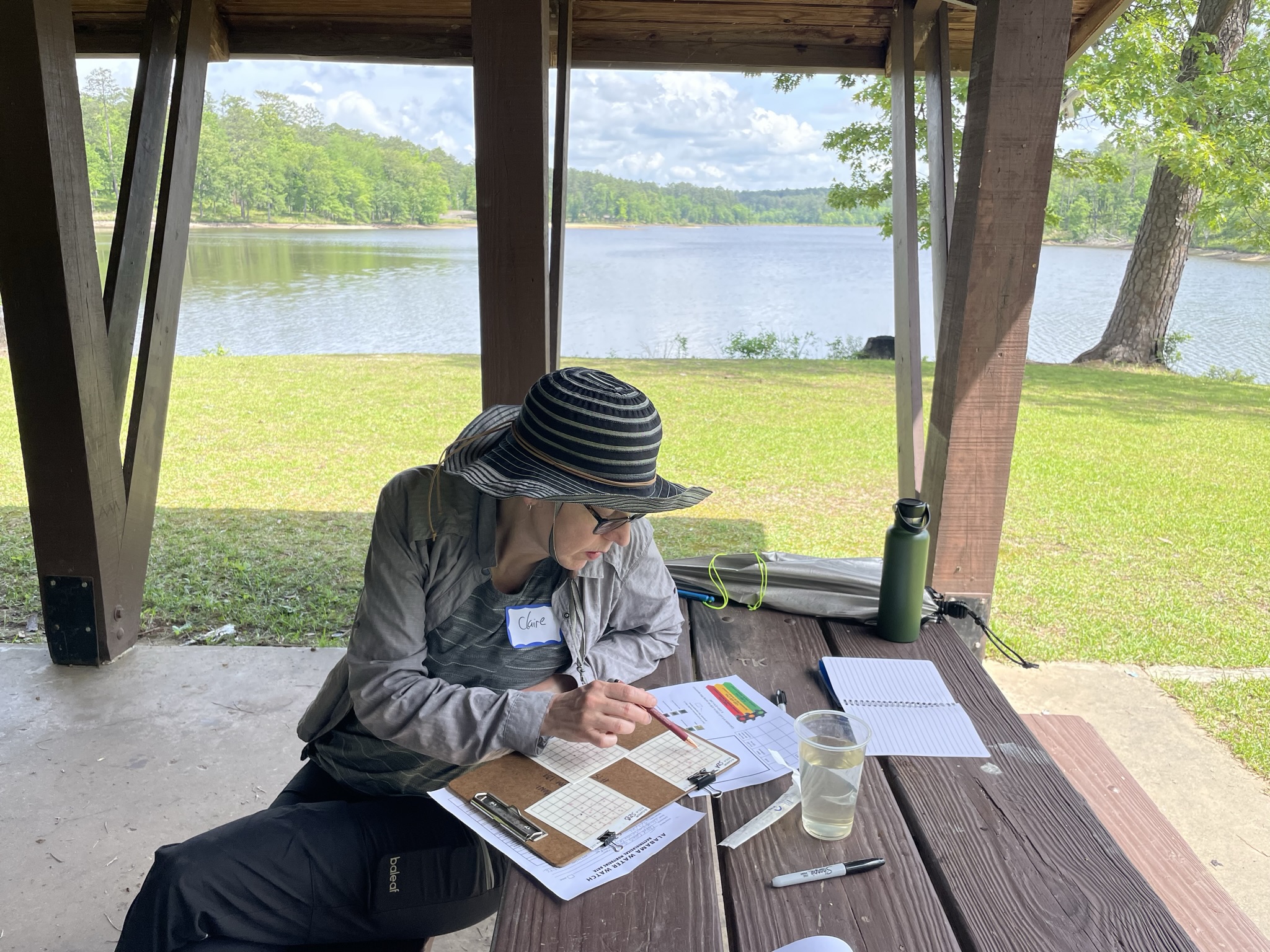
A volunteer counts E. coli colonies to determine results of bacteriological monitoring. Photo credit: Mona Dominguez
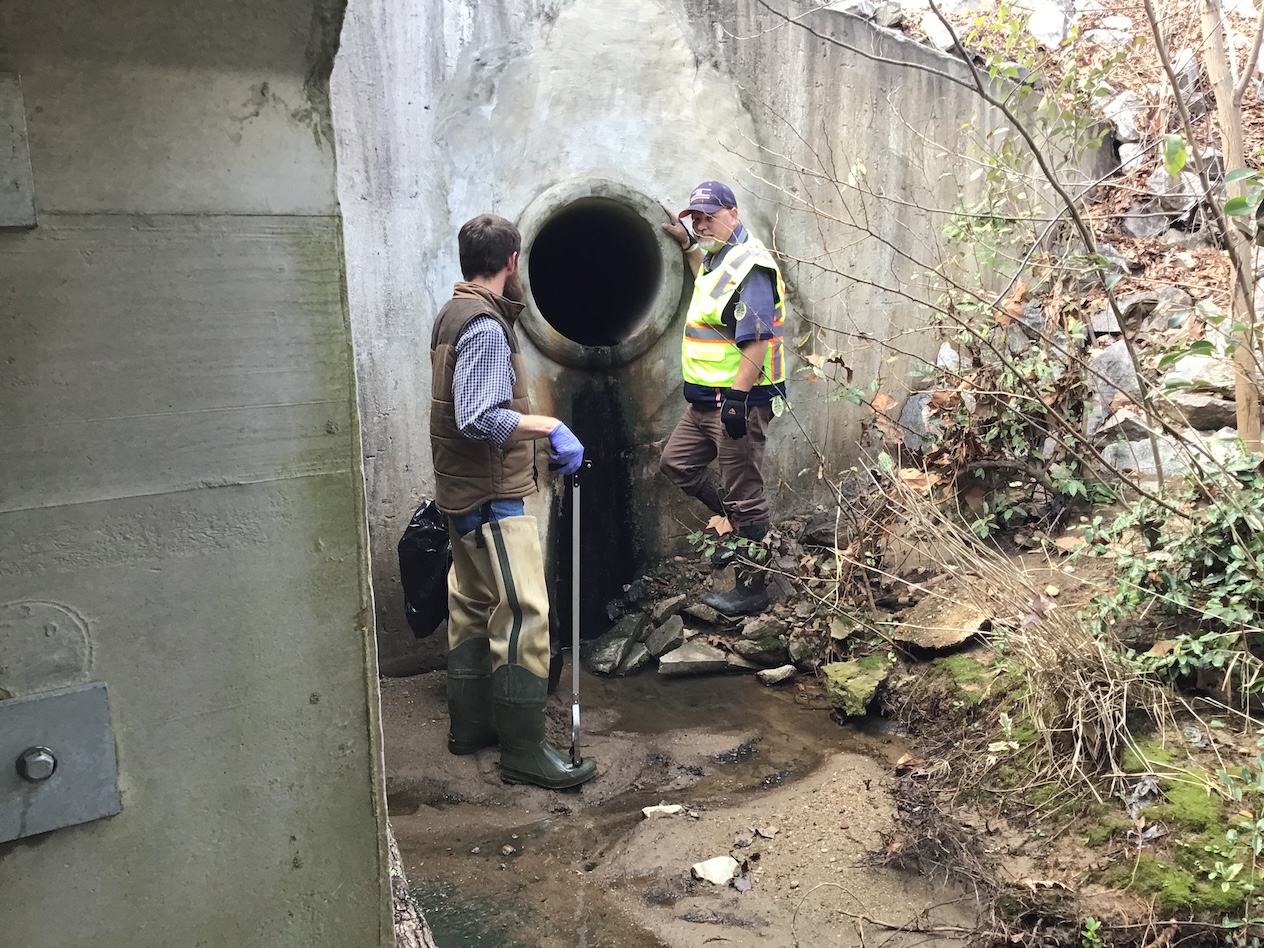
Auburn University and Auburn City Stormwater Managers work together to address a local water quality issue. Photo credit: Dustin Rogers
CASE STUDY:
How Auburn University Works with Alabama Water Watch on Its MS4 Permit
Auburn University falls under MS4 permit requirements. AU Risk Management and Safety (RMS) leads this effort and works with AWW to identify target locations of pollutant concern across campus, create a consistent testing plan, and establish strategic sampling sites. AWW water monitors collect bacteria data from around 13 sites on campus each month. AWW’s fast testing can provide results for bacteria within 24 hours, allowing Auburn University to then investigate sites quickly with high bacteria levels. This ‘first alert’ allows AU Risk Management and Safety to investigate the potential cause further, and when possible, take action. By working with AWW, Auburn can test more frequently with faster feedback loops, making corrective action easier.
This process is often messy and takes time, as issues in MS4 systems are often varied and difficult to detect. Overall, however, it is effective. This project has yielded over 500 data records, helping prevent chronic, undetected pollution in the watershed. Cost estimates show that it would cost over $190,000 to conduct the same amount of data collection through a professional lab. Often, water quality issues cross campus boundaries, and it is necessary to involve the city of Auburn. Much of this project’s success can be credited to the good working relationship between AWW, RMS and the city of Auburn.
In addition to providing water testing, the AWW team works to address problems and meet MS4 Minimum Control Measures. The group helps conduct education and outreach events that help meet the “Public Education and Outreach” minimum control measure requirement.
Citizen science programs like AWW prepare community members to become advocates of effective stormwater management. Volunteer monitors are cost effective extra eyes, ears and noses on the ground who alert stormwater managers of potential pollution issues. However, cities must respect citizen scientists and ensure that volunteers also benefit from being involved. It can be helpful to show appreciation to volunteers by responding to citizen concerns and offering periodic feedback regarding the data they have collected.
Connect with AWW to Learn More
Whether your city is required to meet MS4 requirements or not, please consider the inclusion of citizen science with AWW as you work to protect your community and its water resources. Visit alabamawaterwatch.org to learn more or contact the AWW Office at awwprog@auburn.edu or (334) 844-4785.
Written by Mona Dominguez, Director of Alabama Water Watch. In addition to overseeing the operations of AWW, Mona Dominguez develops training materials, facilitates workshops, and seeks out opportunities for collaboration and growth. She also works internationally with the Global Water Watch Program to develop and implement community-based water monitoring programs.