
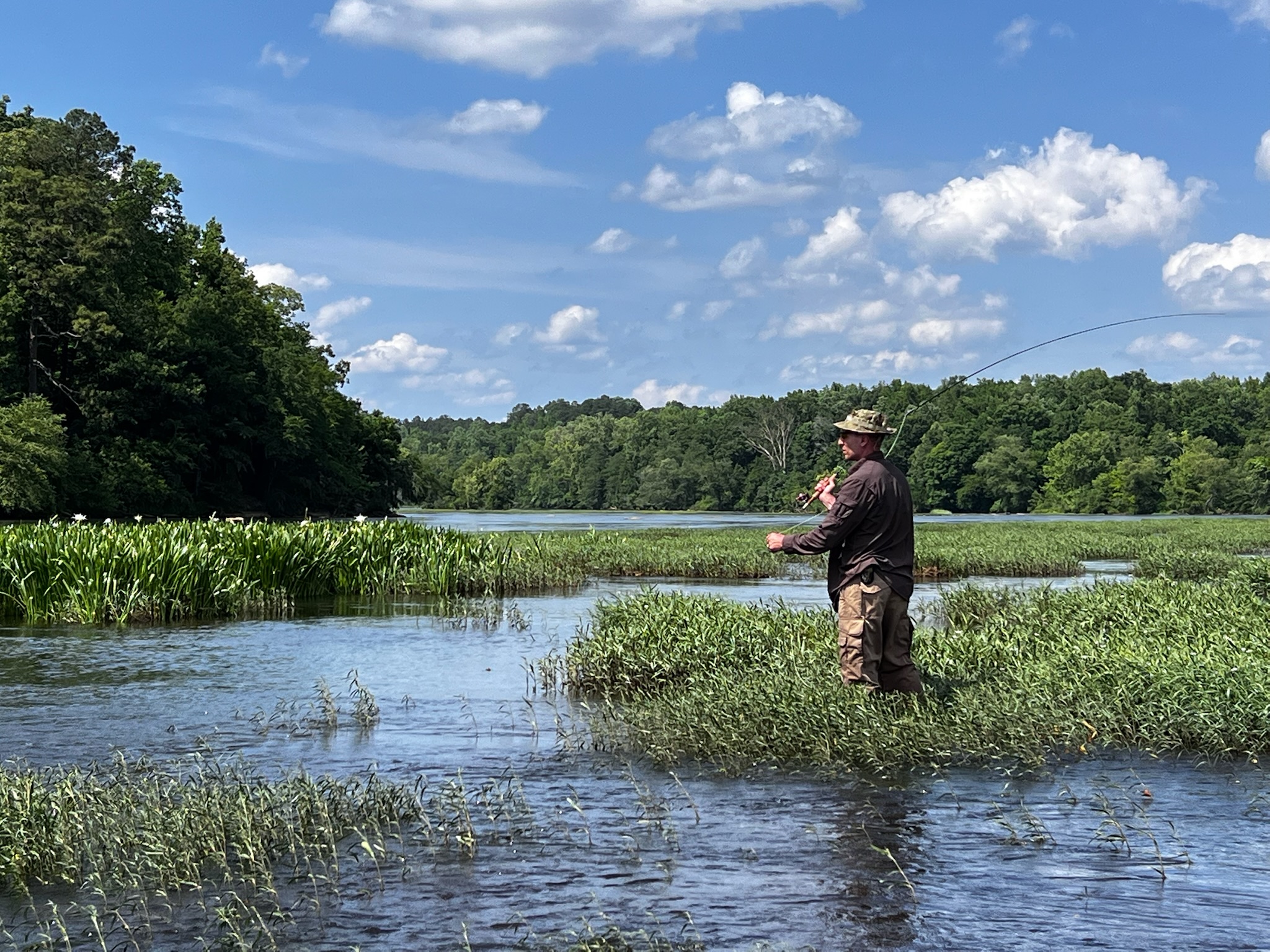
Written By: Emily Ward, Amy Zvonar, Laura Cooley, Rachel McGuire and Sydney Zinner
The Tallapoosa River is a quintessential Alabama river. It is the home to several aquatic species found only in Alabama, including the Tallapoosa Darter, and courses for 258-miles through areas full of rich cultural history (1). Nearly 85% of the 4,680 square miles encompassed by the Tallapoosa River basin is in Alabama, but its headwaters are in Georgia at the southern end of the Appalachian Mountains.
The Tallapoosa River basin drains about half of Alabama’s Piedmont region flowing through 12 Alabama counties: Cleburne, Randolph, Chambers, Tallapoosa, Elmore, Macon, Lee, Coosa, Talladega, Clay, Chilton, and Autauga. The cities of Alexander City, Auburn, Eclectic, Heflin, Lineville, Montgomery, Opelika, Tuskegee, Union Springs, and Wetumpka (1).
The Coosa River and the Tallapoosa meet just north of Montgomery, in Wetumpka, combining to form the Alabama River. The joining of these three rivers forms the Alabama-Coosa-Tallapoosa (ACT) River Basin. The river basin is divided into three major segments or “cataloging units” designated by the 8-digit hydrologic unit codes (HUC) 03150108 (Upper Tallapoosa), 03150108109 (Middle Tallapoosa), and 03150110 (Lower Tallapoosa) (Figure 2).

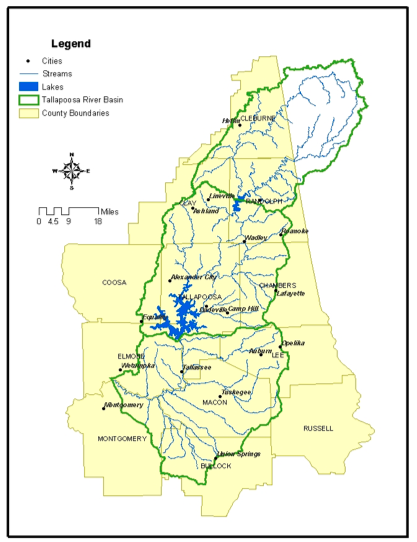
Figure 2: The Tallapoosa River Watershed and its three HUCs.
Photo Credit: Tallapoosa River Basin Management Plan, Clean Water Partnership
History
The history of the Tallapoosa River is intrinsically connected with the Muscogee, a Native American tribe also called Creek, Indians. The river’s name, Tallapoosa, is derived from the Muscogee words “Tvlofv puse/a” which translate to “Grandmother town” (2). This is an apt name for the river because “the Tallapoosa branch of the Muscogee tribe is considered one of the oldest groups in the Southeast.” (2) During the mid-1770’s the writer, explorer, and naturalist William Bartram followed the meanderings of the Tallapoosa as he spent time documenting plants and natural phenomena unknown to scientists of the time (3). Thanks in part to his journal entries, we have some understanding of what a Creek settlement of the lower Tallapoosa River may have looked like at that time (4).
Not long after Bartram’s travels through Alabama, the notable battle at Horseshoe Bend occurred during The Creek War of 1813 (Figure 2). The battle came to a head when a conflict between settlers and Native Americans arose. General Andrew Jackson, accompanied by a group of Tennessee militia, other soldiers, and Indians attacked Chief Menawa and Red Stick warriors in the “horseshoe” bend of the Tallapoosa River.
General Jackson’s forces destroyed the Creeks, leaving an estimated 800 dead. One American observer noted after the battle, “the Tallapoosa might truly be called the river of blood.” After the defeat of the Creeks by the U.S. Army, the Indians relinquished nearly 20 million acres in what is now Alabama and Georgia. Horseshoe Bend National Military Park, created in 1959, preserves a 2,040-acre site of the Battle at Horseshoe Bend.(5)
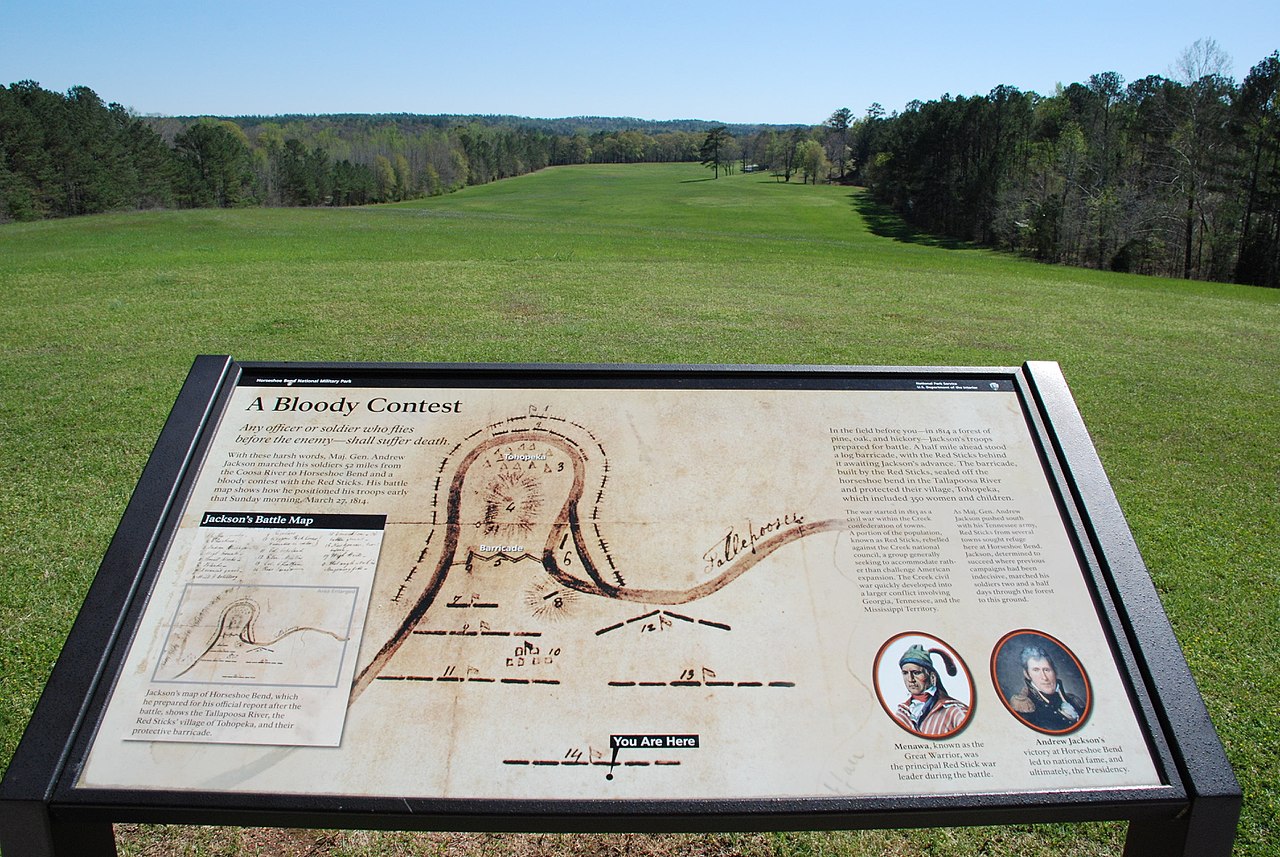
Figure 3. Map of the Battle of Horseshoe Bend. Photo Credit: Allen Patterson, Flickr
Tallassee
The Tallassee area was originally inhabited by Creek Indians. The town’s name is likely an adaptation of the name “Talisi” from the Creek language. Another important Creek settlement near this portion of the Tallapoosa was Tukabatchee, one of the four mother towns of the Muscogee Creek Confederacy. White settlers had pushed the remaining Creeks out of the area by 1835.
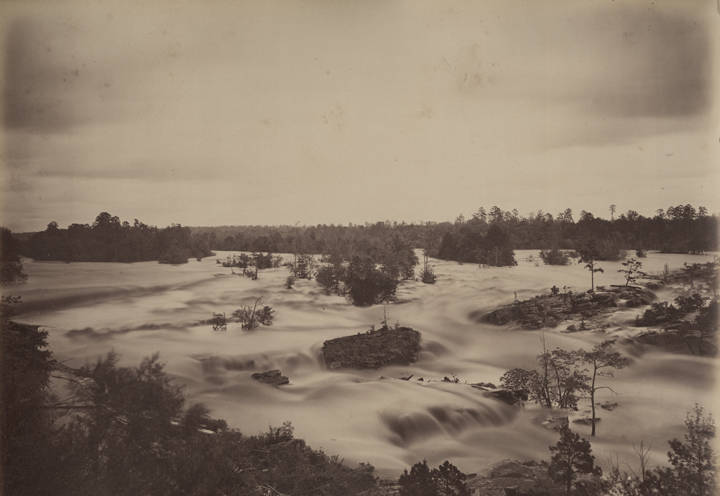
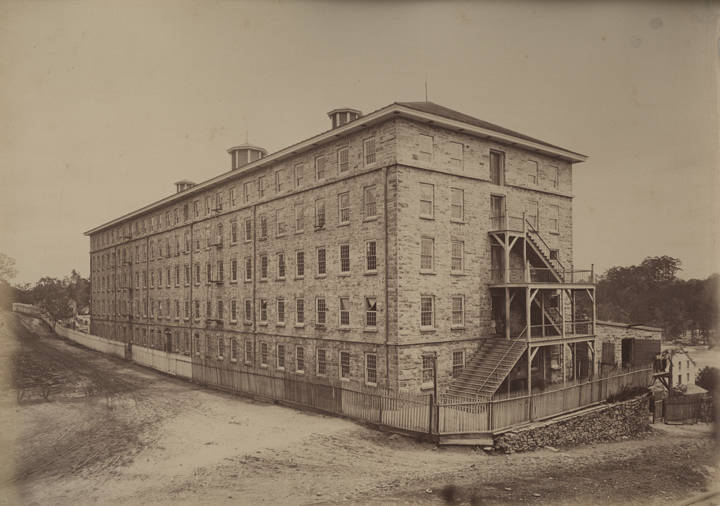
An impressive water feature, Tallassee Falls (Figure 4) drove the textile industry beginning in the 1840’s until well into the 20th century. Historically, before the large dams along the Tallapoosa River and Alabama River, Gulf sturgeon once migrated in the spring as far inland as Tallassee Falls.
The Benjamin Fitzpatrick Bridge atop Tallassee Falls is one of the world’s longest curved bridges, spanning at 1,738 feet and soaring 143 feet above the Tallapoosa near Thurlow Dam in Tallassee. The last of Tallassee’s textile mills closed down in 2005.
Notable Tributaries
The Little Tallapoosa River is a 97-mile-long tributary of the Tallapoosa River that also flows in Alabama and Georgia. The area of the Tallapoosa River above R. L. Harris Reservoir and the Little Tallapoosa River have nearly equal watersheds; the two rivers merge at R. L. Harris Reservoir, also called Lake Wedowee, and continue as the Tallapoosa River.
Saugahatchee Creek This approximately 55-mile-long tributary traverses through Lee County, northern Macon County, and southern Tallapoosa County until discharging into the Saugahatchee Embayment of the Yates Reservoir. Increasing urbanization, agriculture, and silviculture in cities along the creek like Opelika, Auburn, Loachapoka, and Notasulga, along with the listings of Pepperell Branch and the Saugahatchee Embayment of Yates Reservoir on the EPA’s 303(d) list of impaired water bodies contributed to the creation of the Saugahatchee Watershed Managment Plan in the early 2000s (6). The grassroots citizen group Save-Our-Saugahatchee proved instrumental in promoting collaborative efforts to protect the creek. Their citizen-led conservation and water quality monitoring efforts continue today as the Saugahatchee-Chewacla Water Watch group.
Chewacla Creek and Chewacla Lake
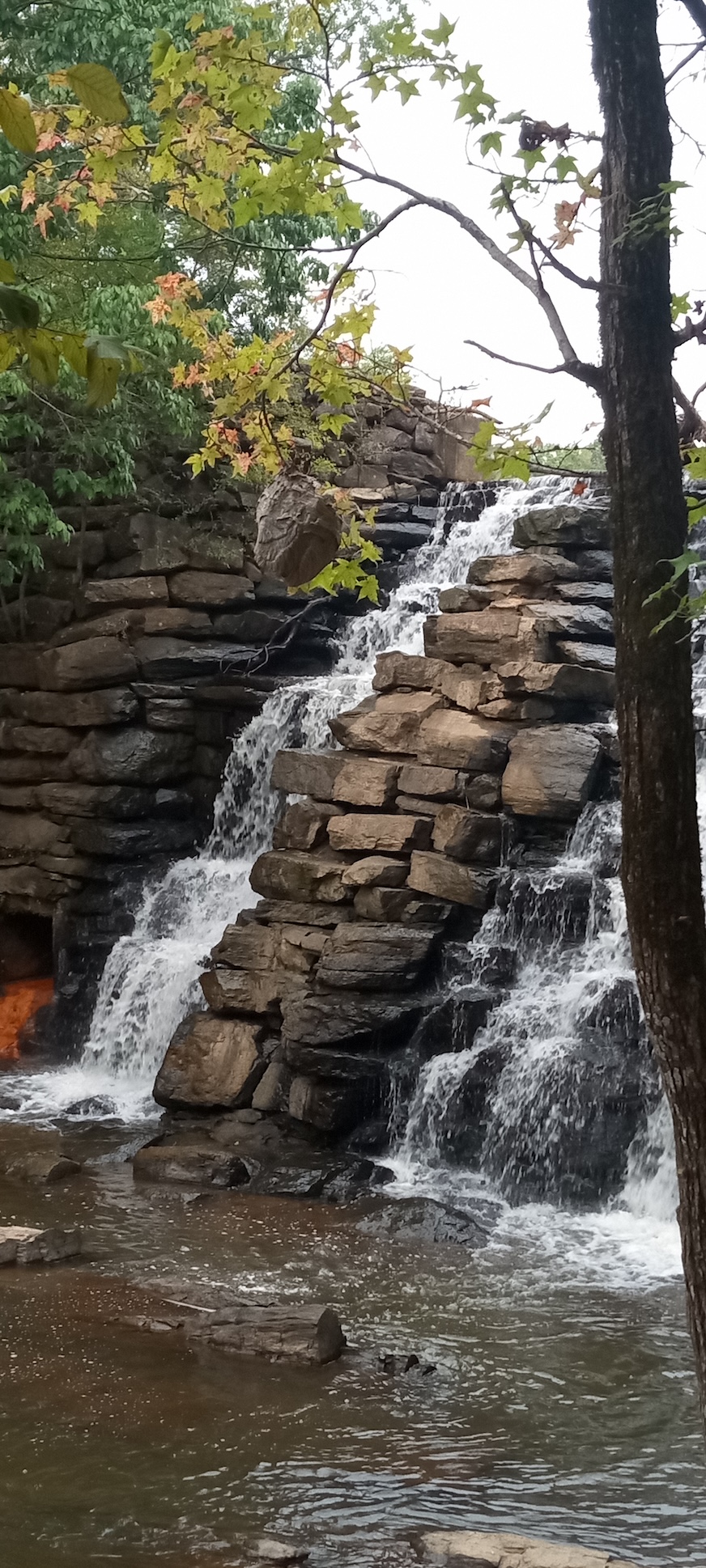
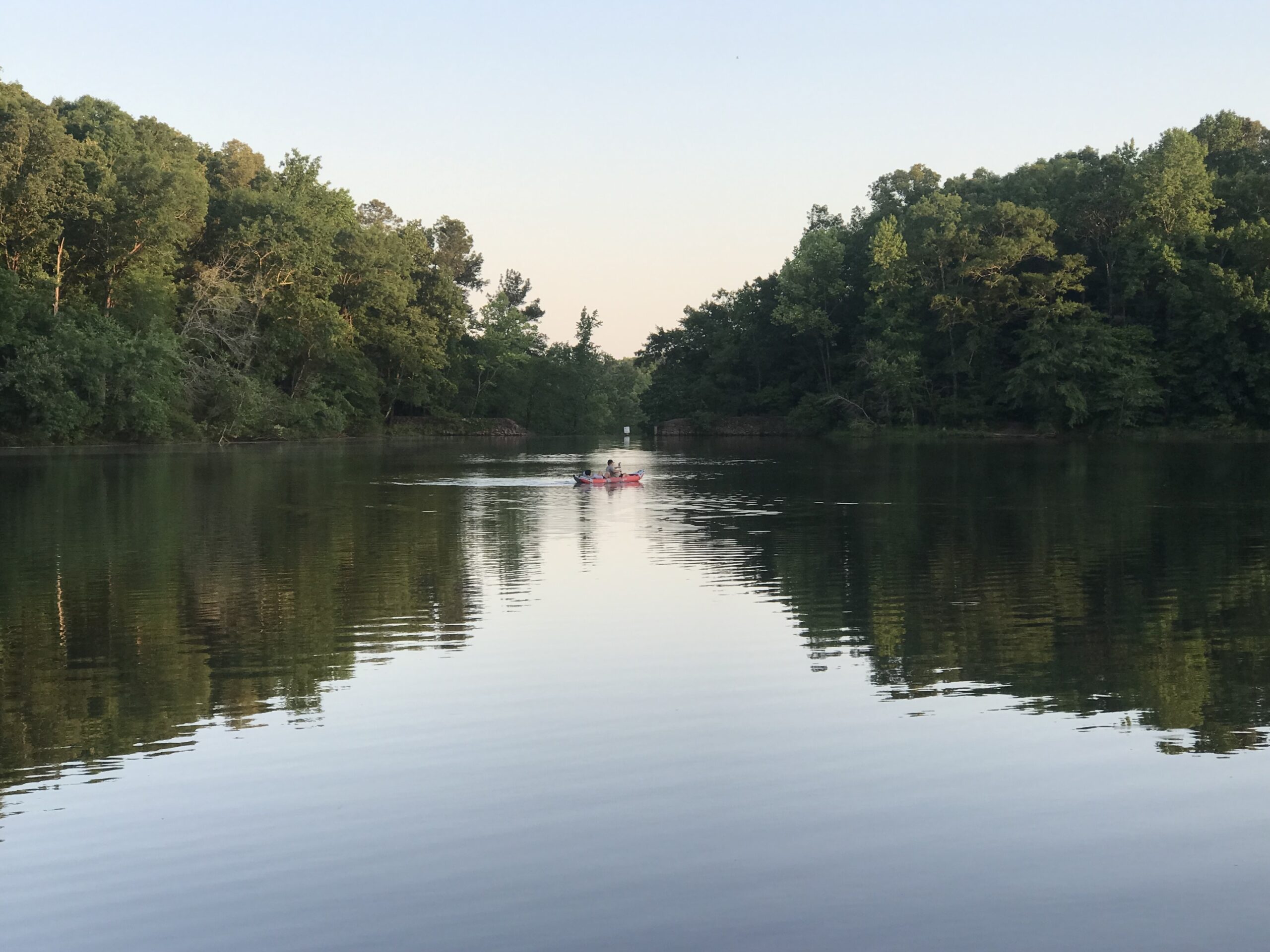
Chewacla creek and Town Creek flow through Chewacla State Park; the creeks were an early site for recreation in Auburn. Starting in the 1840’s, a sawmill was established on Chewacla Creek and by 1873 the mill was owned by W.W. Wright and known as Wright’s Mill (7). The dam for the mill formed a deep mill lake that became a local swimming hole (7). During the 1930’s the area was purchased by the federal government, and the Civil Conservation Corp built a concrete and stone dam (Figure 6) that formed what is now known as Chewacla Lake (Figure 7) (7). Alabama took control of the area in 1939, and established Chewacla State Park (7). Chewacla Lake provides fishing and recreation opportunities, including swimming and kayaking, to the general public. Visit the Chewacla State Park website here to learn more.
Geology
The Tallapoosa River is part of the Tennessee Valley and Ridge and Piedmont Upland physiographic sections of Alabama. In these areas, the waters flow over terrain that consists of carbonaceous, metamorphic, and granite rock which is resistant to erosion. This causes the Tallapoosa River and its tributaries to be softer (contain less mineral content), clearer, and less biologically productive than neighboring river basins.
At times, the geology of the area has provided some economic benefits to the region. For example, granite in the region resulted in a trade of granite millstones in Alexander City and gold could be found in the Piedmont Uplift and may have contributed to an Alabama Gold Rush in the 1830’s (4).
In the Piedmont region the Tallapoosa River flows through narrow river valleys making it relatively easy to dam (8). These dams provide hydropower and deep reservoirs for recreation and fishing but make it more difficult for some of the endemic aquatic species that rely on sunny, shallow streams to survive (8).

Figure 8. Tallapoosa River. Photo Credit: Rowell Guevarra
Noteable Landmarks
Horseshoe Bend National Military Park, created in 1959, preserves a 2,040-acre site of the Battle at Horseshoe Bend. Visitors to the park can learn more about the 1814 Battle of Horseshoe Bend by visiting the interpretive center, driving or biking the 3-mile tour road that takes you along the edge of the battlefield and the bend of the Tallapoosa River for which the park is named, or hiking a 2.8 mile long nature tail around the battlefield and near the Tohopeka Village (the site of a Creek Indian camp in the early 1800s) (5).
To ensure a solemn experience, picnicking is only allowed in two designated areas outside of the commemorative area where 557 Creek warriors and 49 U.S. soldiers died (5). For visitors interested in nature, the park is part of the Piedmont Plateau Birding Trail and the Harold Banks Canoe Trail can be accessed by launching from the Miller Bridge Boat Ramp (Figure 9).
View the Alabama Scenic River Trail website for suggested paddle guides on the Tallapoosa River. You can also sign up for a float guide through East Alabama Fly Fishing.

Figure 9. Kayaking around Horseshoe Bend. Photo Credit: Mona Dominguez, AWW
Lake Martin is home to many year-long and seasonal residents from Auburn-Opelika, Dadeville, Alexander City, and Montgomery areas. In 2010, Lake Martin was designated Alabama’s first and only “Alabama Treasured Lake” (Figure 10). Visit Explore Lake Martin for canoe trails and other recreational opportunities.
Wind Creek State Park is a 1,445 acre preserve on Lake Martin. It is one of the largest, state-owned campgrounds in the United States, visit Alabama State Parks website to learn more about camping opportunities. Wind Creek is the public’s access to Lake Martin, and from here you can check out Chimney Rock located on the lake, a landmark known for cliff jumping.
.
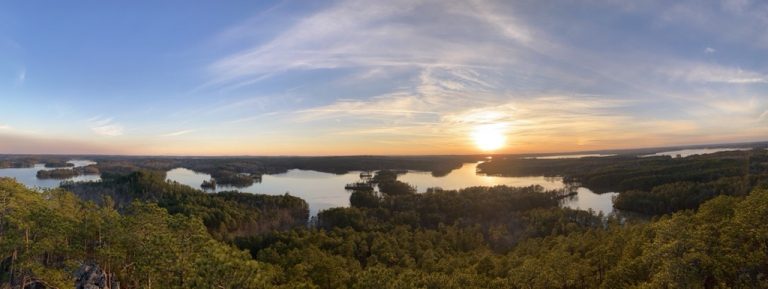
Figure 10. Sunset at Lake Martin. Photo Credit: Jessie Curl, AUWRC
Yates Lake Wildlife Management Area is a tract of 5,810 acres of pine-hardwood hills and creek valleys maintained by Forever Wild. Hunting and fishing (with valid licenses), bird watching, and wildlife viewing are all encouraged activities. Check out Alabama’s Forever Wild website for more information.
Creekline Trails is a recent citizen-led effort to develop a series of creekside trails and greenways for recreation, transportation, and conservation in Opelika. The trails are multi-use and designed for walking, running, and biking. The project is still in its early phases, with pocket parks and greenways planned throughout the Opelika community. Check out the Creekline website to learn more.
The Benjamin Fitzpatrick Bridge sits atop Tallassee Falls and is one of the world’s longest curved bridges, spanning 1,738 feet and soaring 143 feet above the Tallapoosa near Thurlow Dam in Tallassee.
Chewacla State Park in Auburn was established by the state in 1939. It provide 696 acres for hiking, mountain biking, camping, and other outdoor recreational activities (7). There are also 6 stone cottages built in the 1930’s by the Civilian Conservation Corp that are available for rental year-round (7). Visit the Chewacla State Park website to learn more.
Tuskegee National Forest is the smallest National Forest in the U.S. at just over 11,000 acres (9). Tuskegee is located in Macon County in the East Gulf Coastal Plain rolling hills region. Prior to the federal governmental acquisition in 1935 and 1938 as part of the Submarginal Land Program, the land was heavily-eroded cotton farmland (9). It was officially designated as a National Forest in 1959 by President Dwight D. Eisenhower (9) and is home to the Bartram Trail (Figure 11)– the first National Recreation Trail in Alabama.
.
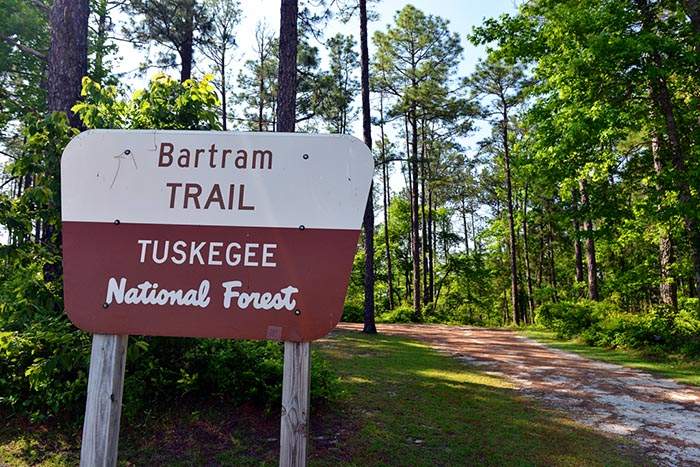
Figure 11. Sign at Bartram Trail in Tuskegee National Forest. Photo Credit: Alabama Birding Trails
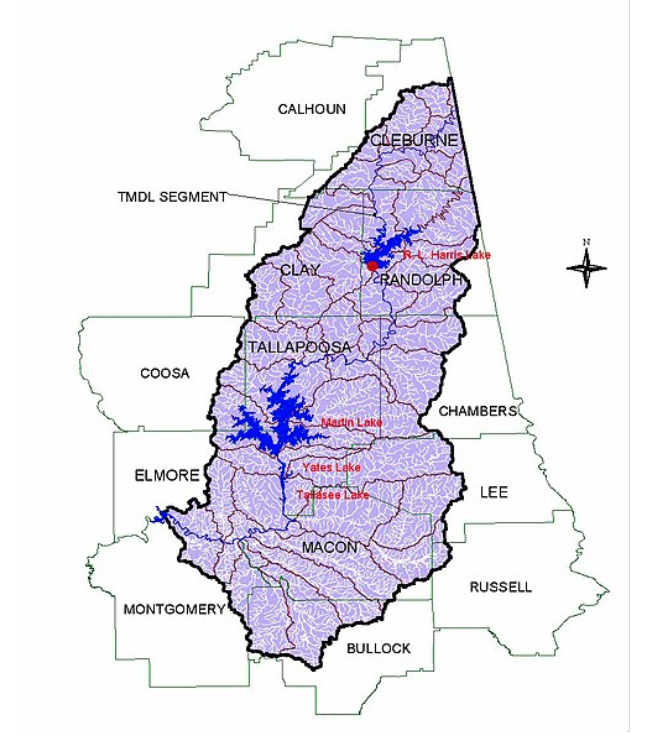
Figure 12. Dams and associated lakes in the Tallapoosa River Basin. Photo Credit: Alabama Department of Environmental Management.
Dams
There are 4 dams in the Tallapoosa River Basin: R.L Harris Dam, Thomas Wesley Martin Dam, Yates Dam, and Thurlow Dam. Alabama Power Company operates all the major hydroelectric dams on the Tallapoosa River including the dams that form several popular reservoirs (Figure 12).
R.L Harris Dam
L. Harris Lake, also known as Lake Wedowee, was one of the last major hydro sites to be constructed in Alabama. The newest of Alabama Power’s hydropower lakes10, the dam went into service in 1983 and includes a 9,870 acre reservoir. The Tallapoosa and the Little Tallapoosa supply water to the reservoir. The reservoir contributes largely to the local economy and recreation as well. For those interested in recreation, Little Fox Day-Use area or Flat Rock Park are recommended. Learn more here.
Thomas Wesley Martin Dam
Martin Dam was the first of 4 dams to be constructed on the Tallapoosa River. Following its completion in 1926, Lake Martin was created, the world’s largest reservoir at the time. The dam was built at Cherokee Bluffs, a landmark in Tallapoosa County (11). The lake is over 150 deep at Martin Dam and is the largest reservoir in Alabama in water volume. It accounts for 31% of the water storage volume for the entire Alabama-Coosa-Tallapoosa Basin.
Yates Dam
Yates Lake, created in 1928, covers 1,980 acres. It is also known as “middle pond” because it impounds the Tallapoosa between Martin and Thurlow reservoirs (12). Though smaller in comparison to the other dams in the basin, this dam is significant because of its location. Yates dam sits on the site of the first hydroelectric plant in Alabama (13). If you are interested in birding in the area, check out the Yates Lake Forever Wild Tract, which provides several miles of hiking trails through woodland and riparian habitats.
Thurlow Dam
Located just downstream of the slightly larger Yates Dam, Thurlow Dam went into service on December 31, 1930. Thurlow is the smallest reservoir of the basin, encompassing 574 acres (14). The dam was built at the site of a 19th century textile mill that was used as a uniform and ammunition plant during the Civil War (15). The dam provides hydropower, but also provides storage for water quality, water supply and recreation (16). The Tallapoosa flows out of the reservoir and joins the Coosa, before eventually joining the Alabama.

Figure 13. Shoal lillies bloom on the Tallapoosa late May-June. Photo Credit: Rowell Guevarra
Wildlife
The Tallapoosa Basin is known for its dense species of game fish but also is home to the rare Tallapoosa Darter (Figure 15), which is only found in the Tallapoosa basin (17). Additionally, the Tallapoosa is home to the endemics the Tallapoosa Shiner and Tallapoosa Sculpin. The Tallapoosa Sculpin was described in 2007, a testament to the incredible aquatic biodiversity of the state of Alabama (18). In the 21st century, it remains possible that the Tallapoosa Basin is home to many more as yet undiscovered aquatic species.
Other fish species found in the Tallapoosa Basin include the lipstick darter, speckled darter, stippled studfish, Tallapoosa shiner, largemouth bass, redeye bass, Alabama spotted bass, and many more. The lipstick darter is facing issues because of a lack of shallow-water habitats in free-flowing streams (8).
The beautiful Tallapoosa bass (Figure 14) is an Alabama endemic species that prefers rocky habitats with flowing water. They are typically between 5 and 16 inches long, slender, and known by anglers to be an especially hard-fighting fish. Less than 10 years ago, the Redeye bass was split into five species, one of which is the Tallapoosa bass.
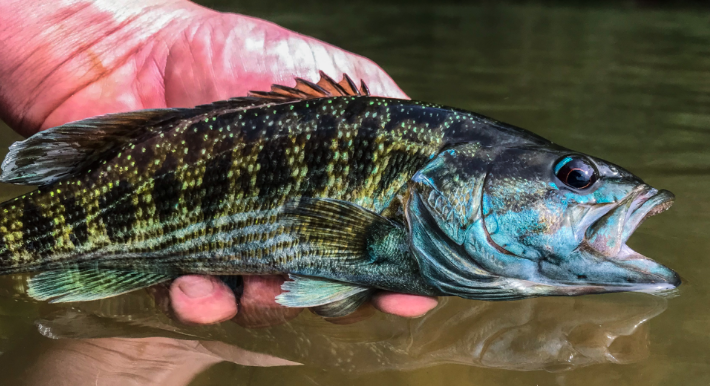
Figure 14. Tallapoosa Bass. Photo Credit: Drew Morgan
There is also a suite of freshwater mussels many of which are rare, and even federally threatened or endangered. The Ovate clubshell, Southern clubshell, and finelined pocketbook (Figure 16) are all examples.
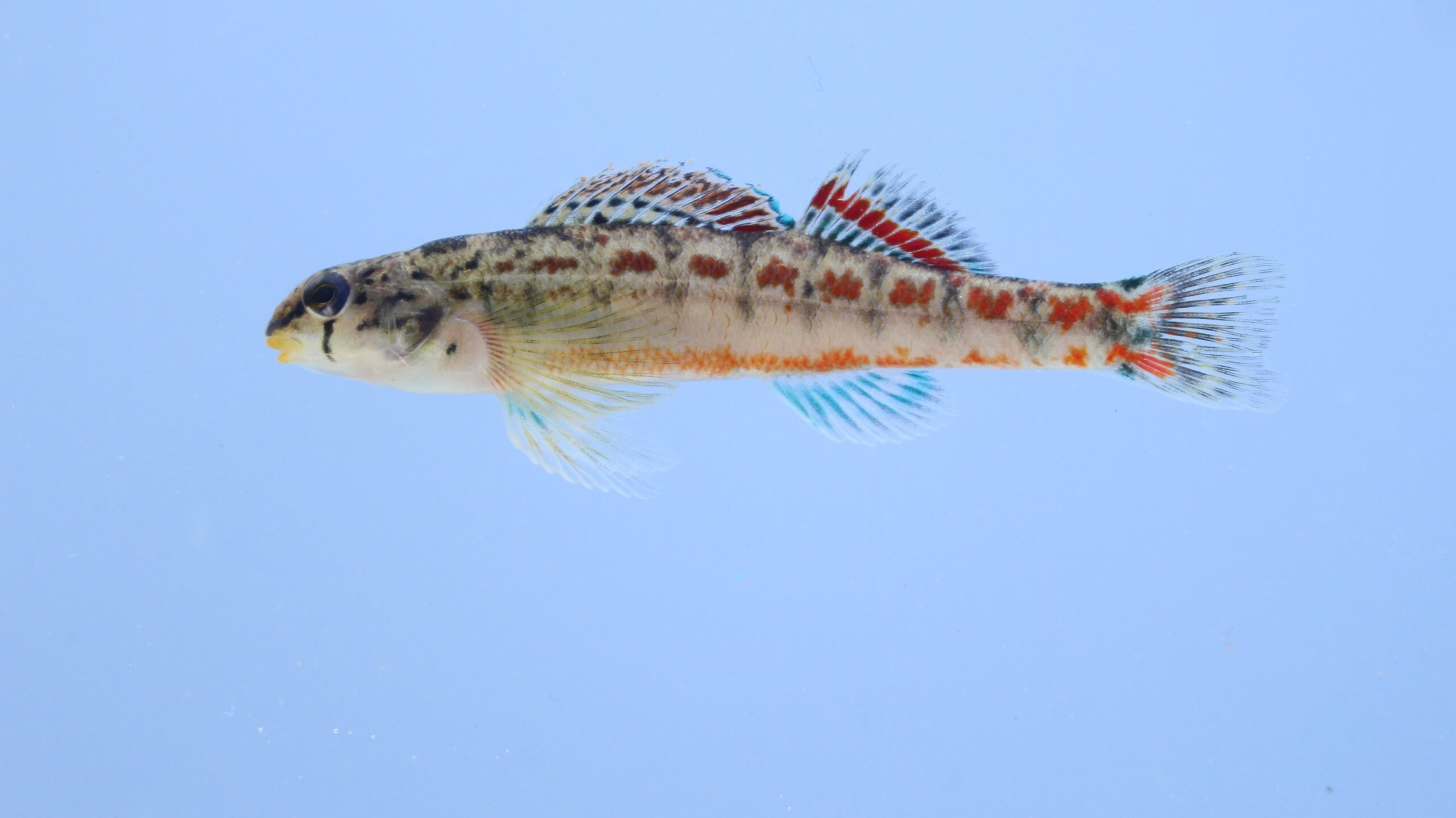
Figure 15. Tallapoosa Darter. Photo Credit: Bill Hilburn
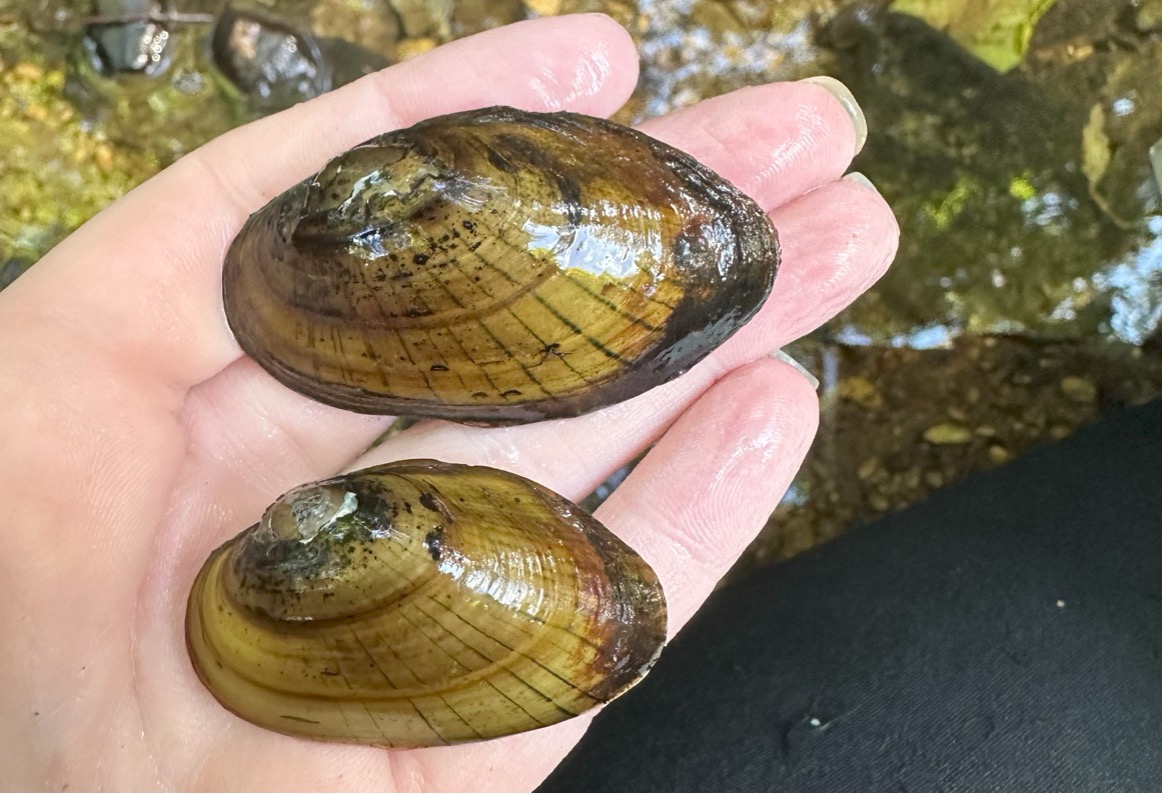
Figure 16. Finelined Pocketbook Mussels. Photo Credit: Brittany Barker Jones
The Tallapoosa River watershed is also home to several interesting species of plant. Little amphianthus (Amphianthus pusillus or Gratiola amphiantha), is a federally threatened species of aquatic plant, also known as pool sprite, that thrives in the granitic environments of the upper Tallapoosa River. Pool sprite can be found living in shallow pools or depressions in granite rocks. The plants grow and reproduce during the winter and spring, before spreading their seeds and withering during May or June as the pools dry up (19). In addition to pool sprite, other noteworthy plants include slender spikerush, which is described as looking like green hair in your hand and several species of bladderworts that have tiny black bladders along their branches used to trap insects (19). Additionally, at least two aquatic plants found in the Tallapoosa River watershed, parrot feather and spiny leaf naiad, are considered exotic plants (20) and you encouraged to report it to EDD Maps database.
Water Quality
The Clean Water Act section 303(d)21list contains the state’s impaired and/or threatened waters. In 2024 the 303(d) list released by the Alabama Department of Environmental Management listed the Tallapoosa River and its tributaries 30 times. The impairments are as follows: 8 counts of Metals (Mercury), 1 count of Nutrients, 1 count of Organic Enrichment (BOD), 15 counts of Pathogens (E. coli), 5 counts of Siltation. The sources that these impairments come from are agriculture, operations, atmospheric deposition, runoff, and development.
The Tallapoosa River Basin watershed management plan can be found here. This watershed management plan is broad in scope and describes the current water quality in the Tallapoosa River Basin, as well as detailing strategies along the upper, middle and lower Tallapoosa to address the identified causes of impairment while engaging and educating stakeholders in efforts to “restore and protect the water resources.” (16).
References
(1) Alabama Department of Environmental Management. (2023). Tallapoosa River Basin. Alabama Nonpoint Source Program. Retrieved from: chrome-extension://efaidnbmnnnibpcajpcglclefindmkaj/https://adem.alabama.gov/sites/default/files/legacyfiles/TrashFreeWaters/pdfs/TallapoosaRiverBasin.pdf
(2) The River Basin Center. (2023, May 24). Tallapoosa – the River Basin Center. Retrieved from: https://rivercenter.uga.edu/resources/river-basins-of-georgia/tallapoosa/
(3) Hall, John C. From the Vault: William Bartram- First Scientist of Alabama. Alabama Heritage. 2004; 72. Retrieved from:
https://www.alabamaheritage.com/blog/2025/04/22/from-the-vault-william-bartram-first-scientist-of-alabama/
(4) Deutsch, W. G. (2019). Alabama Rivers: A Celebration & Challenge. MindBridge Press.
(5) Horseshoe Bend National Military Park. February 28, 2025. Retrieved from: https://www.nps.gov/hobe/index.h
(6) ALOA Storm Advisory Panel. Saugahatchee Watershed Storm Water Management Program. Retrieved from:
https://static.auburnalabama.org/media/apps/www/water-resource-management/watershed/aloas/Saugahatchee%20Creek%20Watershed.pdf
(7) Ress, V. Thomas. Chewacla State Park. Encyclopedia of Alabama. April 20, 2010. Updated July 21, 2025. Retrieved from: https://encyclopediaofalabama.org/article/chewacla-state-park/
(8) Duncan, R. S., & Wilson, E. O. (2013). Southern Wonder Alabama’s surprising biodiversity R. Scot Duncan ; Foreword by Edward O. Wilson. The University of Alabama Press.
(9) National Park Service. Tuskegee National Forest. Encyclopedia of Alabama. 2025. Retrieved from: https://encyclopediaofalabama.org/media/tuskegee-national-forest/
(10) Harris Reservoir | Outdoor Alabama. (n.d.). Outdoor Alabama. Retrieved from: https://www.outdooralabama.com/reservoirs/harris-reservoir
(11) Etress, J. (2024, March 22). Lake Martin | Lake Level and Dam | Alabama Power Shorelines. Alabama Power Shorelines. Retrieved from: https://apcshorelines.com/lake/martin/
(12) Yates Lake | Outdoor Alabama. (n.d.). Outdoor Alabama. Retrieved from: https://www.outdooralabama.com/resovoirs/yates-lake
(13) Etress, J. (2024, March 22). Yates | Lake Level and Dam | Alabama Power Shorelines. Alabama Power Shorelines. Retrieved from: https://apcshorelines.com/lake/yates/
(14) Thurlow Reservoir | Outdoor Alabama. (n.d.). Outdoor Alabama. Retrieved from: https://www.outdooralabama.com/resovoirs/thurlow-reservoir
(15) Etress, J. (2024, March 22). Thurlow | Lake Level and Dam | Alabama Power Shorelines. Alabama Power Shorelines. Retrieved from: https://apcshorelines.com/lake/thurlow/
(16) Alabama Department of Environmental Management. (2005). Tallapoosa River Basin Watershed Management Plan. Retrieved from: https://www.adem.alabama.gov/programs/water/nps/files/tallapoosabmp.pdf
(17) Mettee, Maurice F., et al. Fishes of Alabama and the Mobile Basin. Oxmoor House, 1996. Retrieved from: https://www.outdooralabama.com/darters/tallapoosa
(18) Outdoor Alabama. Tallapoosa Sculpin. 2025. Retrieved from: https://www.outdooralabama.com/sculpin/tallapoosa-sculpin
(19) Chafin, Linda G. Gratiola amphiana. December 2007. Updated January 2010, January 2020. Retrieved from: https://georgiabiodiversity.org/portal/profile?group=plants&es_id=19759
(20) Outdoor Alabama. Aquatic Plant Guide. 2025. Retrieved from: https://www.outdooralabama.com/aquatic-plants-alabama/aquatic-plant-guide
(21) Alabama Department of Environmental Management. (2024). Section 303(d) List Clean Water Act. Retrieved from: https://adem.alabama.gov/programs/water/wquality/2024AL303dList.pdf