
This article was written by Laura Cooley and originally appeared in the Alabama Municipal Journal, you can find the full article here.
Alabama communities are creatively using local waterways to bring in recreation and tourism. Thinking ahead about protecting local waterways may be in your communities’ best interest.
Thinking about our local waterways as community assets can help us expand recreational and fishing opportunities, while also encouraging us to protect our valuable natural resources long-term. Alabama has an exceptional number of waterways that can be leveraged to expand the state’s ecotourism industry, but currently many of our local waters remain under-utilized, under-appreciated, and under-protected.
The Value of Alabama’s Waterways
The value of Alabama’s rivers includes their ability to grow the state’s economy while promoting recreation and tourism. Fishing tournaments, such as the Alabama Bass Trail and the Alabama Deep Sea Fishing Rodeo, draw significant crowds and generate revenue for local communities. Ecotourism like canoeing, camping, and kayaking trips also bring in significant revenue although it can be more difficult to measure. Alabama’s rivers, lakes, streams and wetlands are home to more species of aquatic and semiaquatic animals than any other state in the country, which is a major boon to kayakers, fishers and birdwatchers alike.
Here’s the catch (pun intended): water recreation relies on clean healthy waterways and public access points. We must protect our waterways to protect our hunting and fishing assets and give people access to those resources. We may no longer be transporting goods on barges, but plenty of Alabamian’s still want to get out on our waterways, and that number keeps growing as more communities see the value of their natural resources. S ometimes the change must start with a vision.
[LC1]A survey conducted for Alabama’s 2013–18 Statewide Comprehensive Outdoor Recreation Plan found that 93 percent of Alabama residents stated that outdoor recreation was important or very important to them. Eighty-four percent of Alabamians stated that recreational trails were important or very important to them. Only 56 percent of the respondents, however, said they were satisfied with outdoor recreation facilities and trails in Alabama. There are various programs across the state that are intended to support outdoor recreation and protecting our environment, but sometimes the change has tomustmust start with an idea and a vision.
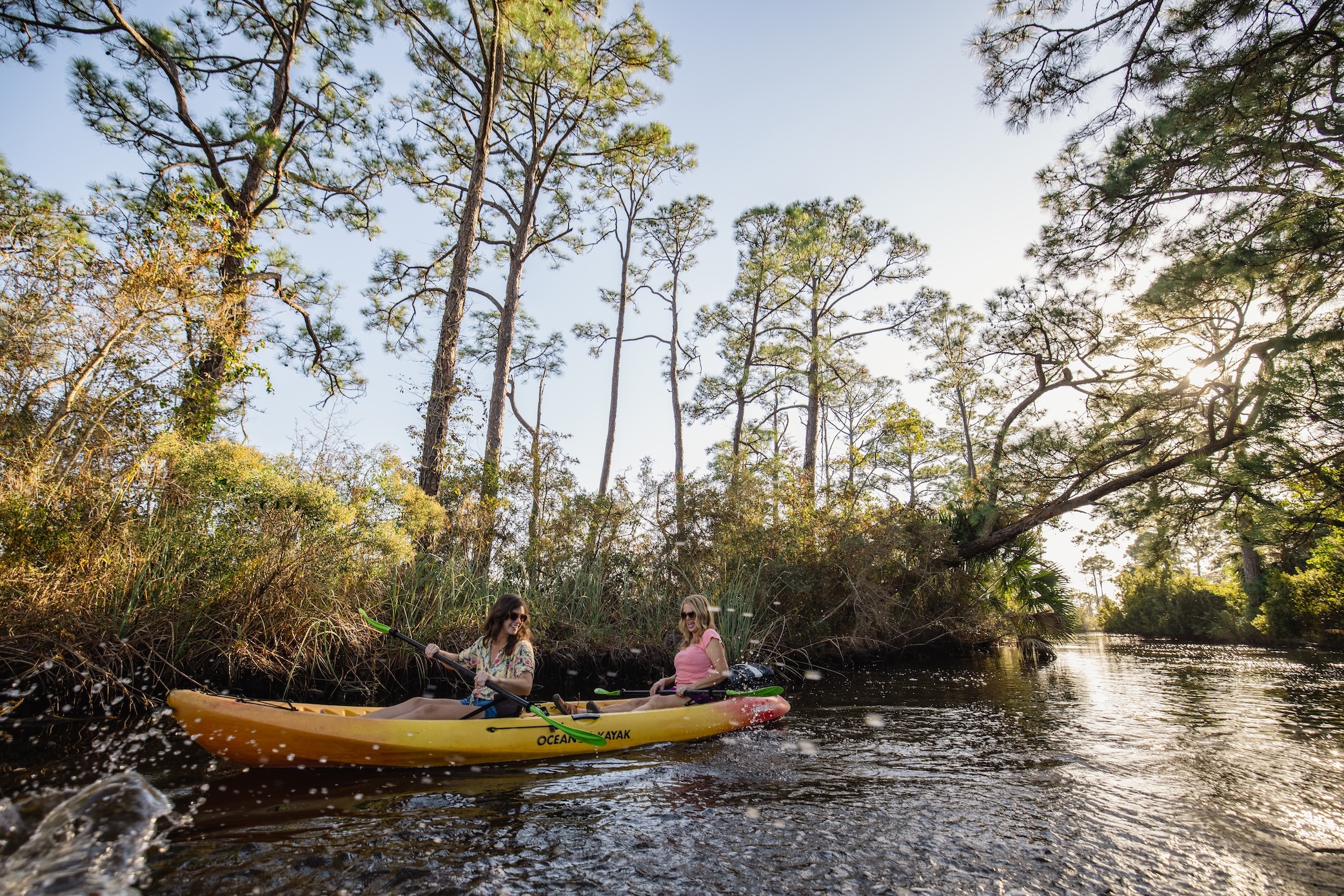
Kaykers enjoy the Coastal Alabama Back Bay Blueway. Photo Credit: Gulf Shores Tourism
Rivers of Opportunity
How could your community rethink its existing water resources? Consider these inspiring examples from across the state of creative ways to leverage local waterways into a community asset.
Blueways and Trail Systems
The Coastal Alabama Back Bay Blueway has four trails and 21 launch points for paddlers across Orange Beach, Gulf Shores, and Fort Morgan. You can stop by the Gulf Shores Welcome Center on the way into town and pick up a copy of the launch points. This effort spans multiple cities to make the Back Bay Blueway accessible to locals and visitors alike.
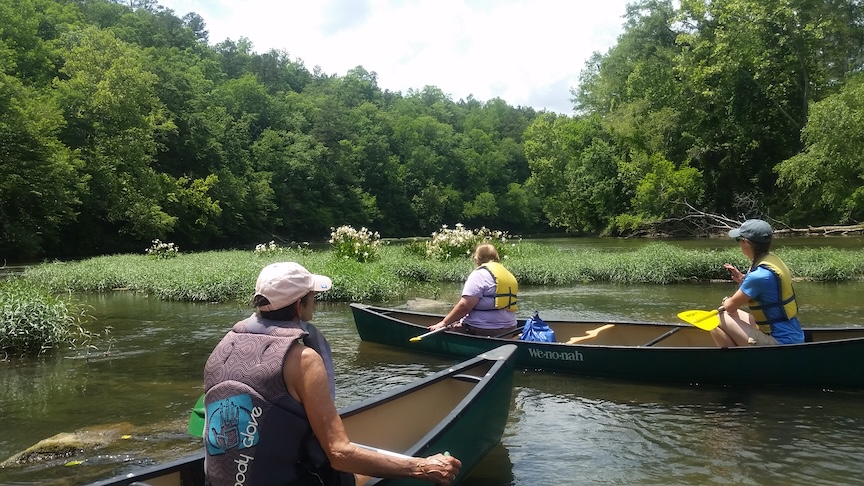
The Cahaba Blueway
The Cahaba Blueway is in the process of becoming a formal “water trail” on the Cahaba by providing the infrastructure, branding, and information needed to make accessing the river easier. The University of Alabama Center for Economic Development (UACED) has worked with the Cahaba River Society, The Nature Conservancy, Cahaba Riverkeeper, Freshwater Land Trust, and the National Park Service’s Rivers, Trails, and Conservation Assistance Program to realize the Cahaba’s potential through the Cahaba Blueway initiative. https://www.cahabablueway.org/
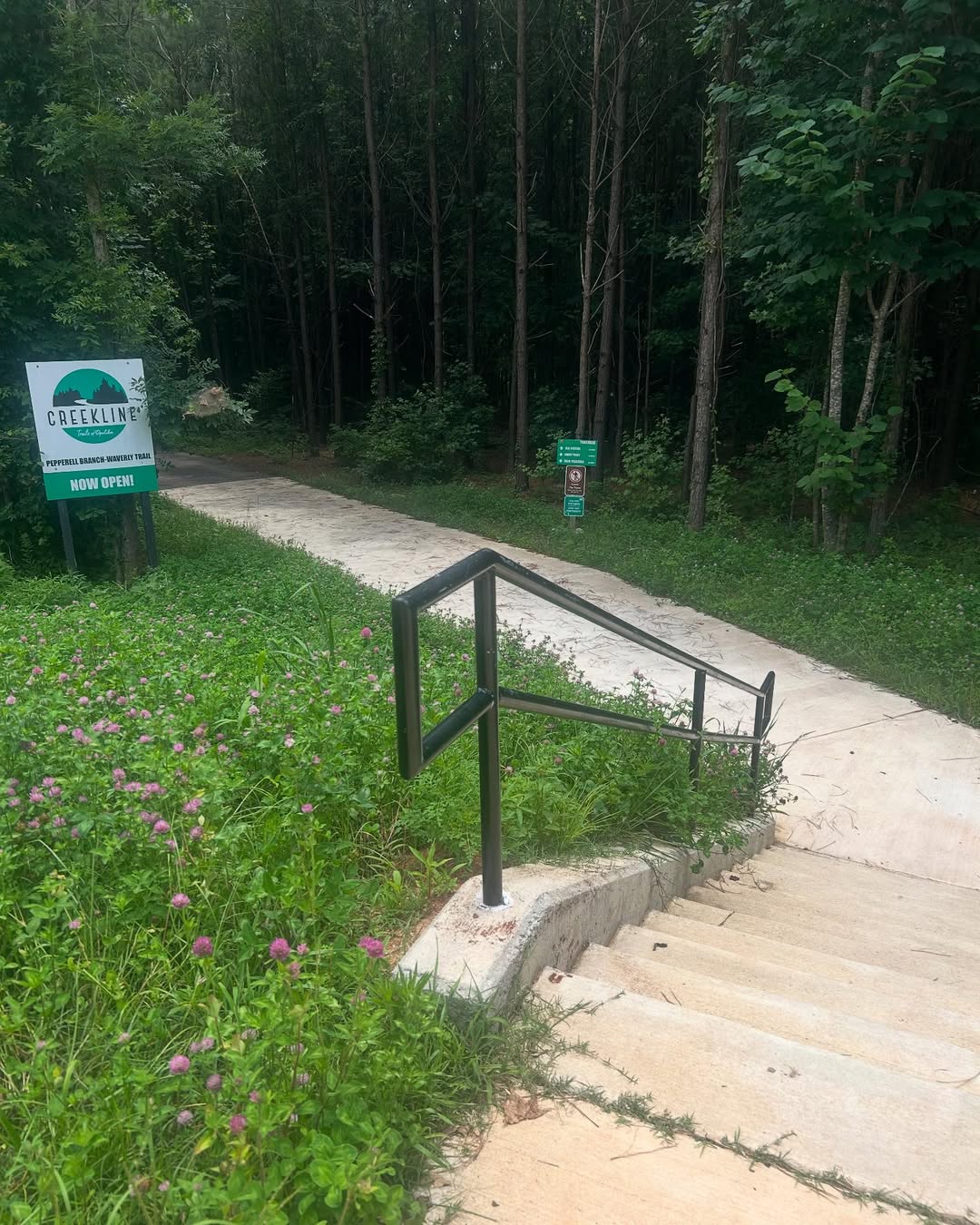
A pathway leading to the Creekline trail that runs next to Pepperell Branch. Photo credit: Creekline Trails of Opelika
Creekline Trails of Opelika
Creekline Trails of Opelika is a citizen-led project in Lee County, AL developing multi-use creekside trails and greenways along the watershed streams of Opelika. Originally starting as a vision by community leaders, it has become a collaborative effort with the City and other organizations in Opelika. After participating in the National Park Service’s Rivers, Trails, and Conservation Assistance Program, the Creekline has leveraged multiple other small grants and City support to begin trail building, which has resulted in a popular walking trail. https://creeklineopelika.org/
The Singing River Trail
The Singing River Trail will be a 200+ mile greenway system that strengthens regional bonds, and creates new health and wellness, educational, economic, tourism, and entrepreneurial opportunities for the people and communities of North Alabama. At the start of 2025, The Singing River Trail had finished planning 180 miles of new trails, was actively planning 67 additional trails. https://singingrivertrail.com/
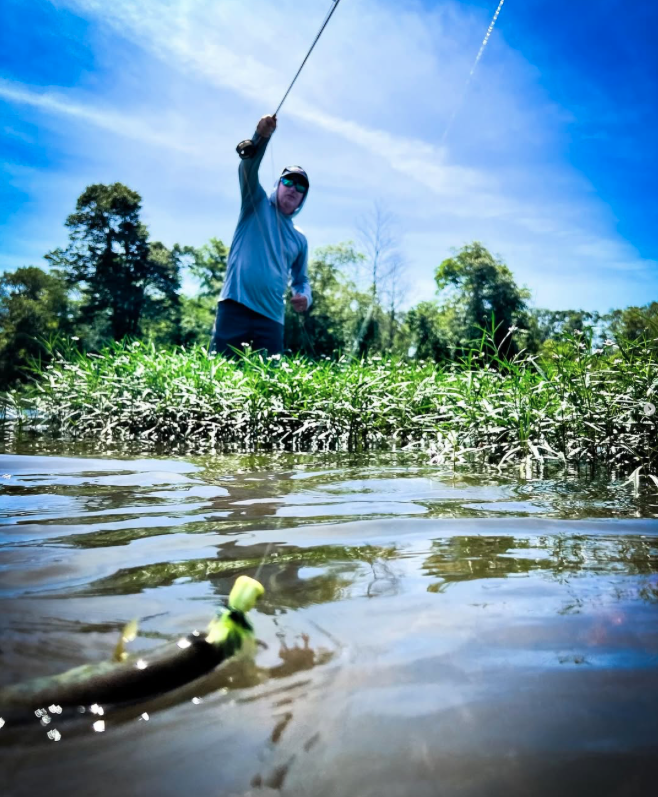
Fly Fishing on the Tallapoosa. Photo credit: East Alabama Fly Fishing
Events, Organizations, and Entrepreneurs
East Alabama Fly Fishing: This organization connects expert river guides with interested fly-fishers to provide one-of-a-kind drift boat fly fishing experiences across East Alabama. They offer half to full day float trips where participants fish for Alabama Bass (spotted bass), Tallapoosa Bass (formerly known as Redeye Bass), and learn about the nuances of the waterways.
Alabama Scenic River Trail: (ASRT) is a nonprofit with a mission to get more people on the water. ASRT features specific paddle trails across the state, and highlights access points and available outfitters for outdoor recreation trips. Their Alabama Waterway Enhancement Program provides small grants for launch sites, safety equipment, educational programs, paddling or cleanup events. https://www.alabamascenicrivertrail.com/
Annual RiverFests: Various communities across Alabama host “River Fests,” community wide events that celebrate getting out on the water and bringing people together. Some examples include Tallapoosa RiverFest, New Site RiverFest, and Grand RiverFest.
Dog River Clearwater Revival (DRCR): This organization’s goal is to protect the health of the Dog River Watershed in Mobile County by actively engaging the community through various programs. They test water quality, remove trash, restore wetlands, and promote waterway access. The Dog River Scenic Blueway provides recreational opportunities, access points, and stewardship opportunities. They also host the annual MudBottom Revival Music Festival as a way to raise awareness and funds for DRCR’s ongoing Dog River improvement projects. https://dogriver.org/
How to Get There
Perhaps you have ideas about how to make your local waterways an asset to the community. How do you move toward your vision?
Plan
Plan for what you’d like to achieve with project goals, objectives, timelines, and funding options. Consider looking into the Alabama’s 2026 Statewide Comprehensive Outdoor Recreation Plan (SCORP) that is being developed which will guide local, regional, statewide, and federal agencies in providing for and managing public outdoor recreation within a state. Consider getting planning assistance from programs like the National Park Rivers, Trails and Conservation Assistance Program, or discussing your ideas with the Regional Planning and Development Commissions.
Partner
Find local and regional partners who can help further your mission. Look into groups with similar goals like Rails to Trails Conservancy, Alabama Birding Trail, Main Street Alabama, The Nature Conservancy, Alabama Scenic Rivers Trail Outfitters, or local universities that may have programs that align.
Provide
Search for funding. The Alabama Department of Economic and Community Affairs (ADECA)
offers two potential sources of funding: 1. The Land and Water Conservation Fund provides outdoor recreational opportunities for the general public through land acquisition, development, or a combination of acquisition and development. 2. The Recreational Trails Program provides grant assistance to State and Federal agencies and local units of government for the acquisition and/or development/improvement of recreational trails and trail related resources. For smaller projects, consider looking into RC&D Grants, Watershed Improvement Grants from the Alabama Scenic River Trail, Community Foundations, or other fund-raising initiatives.